Sticky Casino Bonuses Explained
Last updated: 20 September 2026
A sticky bonus is one of those casino bonus terms that sounds harmless - until you try to withdraw. The short version: you can play with the bonus, but the bonus money itself is usually not withdrawable, and the rules around wagering and cashouts can be stricter than players expect.
This guide explains how sticky bonuses work, how they differ from non-sticky bonuses, what happens when you withdraw, and which terms to check before claiming - including wagering requirements, max cashout limits, max bet rules and restricted games.
Quick Picks: Non-Sticky & Bonus-Friendly Casinos
Non-Sticky & Bonus-Friendly Casino Comparison
If you'd rather avoid the restrictions that often come with sticky bonuses, these casinos are a good place to start. The selection includes casinos with confirmed non-sticky bonuses alongside alternatives with flexible bonus and withdrawal terms.
Compare the welcome offers, crypto support, USA availability and main strength of each casino below.
← Swipe to view full table →
| Casino | Welcome Bonus | Crypto | USA? | Best For |
|---|---|---|---|---|
| Las Vegas USA | 400% up to $500 | ✅ | ✅ | Non-sticky deposit bonuses |
| Sloto'Cash | $7,777 + 300 free spins | ✅ | ✅ | Non-sticky ALL bonuses |
| Lucky Elf | Up to $/€20,000 + 500 free spins | ✅ | ❌ | 15-minute payouts |
| Decode | 111% up to $1,111 + $111 free | ✅ | ✅ | Weekly non-sticky reloads |
Casino Beacon Opinion
Sticky bonuses aren't automatically bad, but the advertised bonus amount can distract from the terms that matter most. When two offers provide similar value, a non-sticky bonus is usually the simpler choice because the bonus can become withdrawable after wagering rather than being removed at cashout.
 Las Vegas USA
$20 free at sign-up with no deposit required, followed by a 400% first deposit bonus up to $500. Deposit bonuses are non-sticky, and Las Vegas USA has been online since 1999.
Play Now - See Review
 Sloto'Cash
All deposit bonuses are non-sticky with unlimited cashouts. Casino Beacon visitors start with 20 free spins on T-Rex II, followed by a welcome package worth up to $7,777 + 300 free spins.
Play Now - See Review
 Lucky Elf
Up to $/€20,000 + 500 free spins over the first five deposits for players in Australia, Austria, Canada, Denmark, Finland, Germany, Ireland, New Zealand, Norway and Switzerland. 13,000+ games and 15-minute cashouts are available.
Play Now - See Review
 Decode
10 free spins on Fat Ca$h with no deposit required, followed by a non-sticky 111% first deposit bonus up to $1,111 + $111 free. Weekly reload bonuses are also non-sticky.
Play Now - See Review
- Check if the bonus is sticky, non-sticky, or described as cashable/non-cashable.
- Confirm the wagering requirement and whether it applies to the bonus only or bonus + deposit.
- Look for a max cashout limit (this is very common on sticky bonuses).
- Check max bet rules (see max bet rules).
- Check restricted games and whether slot bonus buys are excluded.
- Confirm what happens at withdrawal: is the bonus removed automatically?
- If anything is unclear, ask support to confirm it in writing before you play.
- For more advice on bonus terms, withdrawals and casino play, see our casino dos and don'ts guide.
What is a sticky bonus?
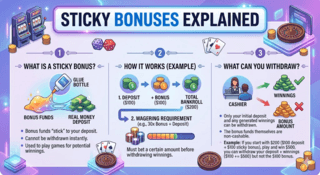
A sticky casino bonus means the bonus money is generally not withdrawable. You can use it to play, and you might be able to withdraw eligible winnings after meeting the terms - but the bonus amount itself is normally removed when you cash out (or when the bonus ends).
- Sticky bonus = the bonus amount itself is not withdrawable.
- You may still withdraw winnings, but only if you follow the terms exactly.
- Sticky bonuses often come with a max cashout cap that limits how much of your winnings can be withdrawn.
Sticky vs non-sticky bonuses (quick comparison)
Sticky and non-sticky bonuses can both increase your playing balance, but the key difference is what happens to the bonus money after wagering and when you withdraw.
← Swipe to view full table →
| Feature | Sticky Bonus | Non-Sticky Bonus |
|---|---|---|
| Is the bonus itself withdrawable? | Usually no - the bonus is non-cashable | Often yes after wagering, depending on the terms |
| What happens at withdrawal? | The bonus is typically removed | The bonus may become part of the withdrawable cash balance after wagering |
| Max cashout limits | Common | Less common, but still possible |
How withdrawals work with sticky bonuses
Here's the typical flow. Exact rules vary by casino, but this is the process behind many 'Why can't I withdraw?' problems:
- Step 1: You claim a bonus (welcome bonus, reload, free spins, etc.).
- Step 2: Your balance is 'bonus-linked' (cash and bonus may be tracked separately or blended).
- Step 3: Withdrawals are normally unavailable until you meet the relevant terms (wagering, game restrictions and max bet rules).
- Step 4: Once wagering is completed, you may be able to withdraw eligible winnings - but the bonus amount itself is removed (and max cashout caps may apply).
- Step 5: The casino may review your bonus play against the terms before approving the withdrawal.
Top sticky bonus traps (and how to avoid them)
Sticky bonus terms can be much more restrictive than the advertised offer suggests. The important details are usually the wagering requirement, max cashout, max bet and game restrictions.
The sections below cover the terms most likely to affect how much you can withdraw and what can cause bonus winnings to be reduced or refused.
1) High wagering requirements
A large bonus can still be difficult to clear if the wagering requirement is high. Check whether wagering applies to the bonus only or to the deposit and bonus combined before claiming. For more detail, see our wagering requirements guide.
2) Max cashout limits
A sticky bonus may cap how much you can withdraw, even when your balance is higher. The limit might be expressed as '5x the bonus amount' or as a fixed cash value. Our max cashout rules guide explains how these limits work and where to find them in the terms. If uncapped withdrawals matter, see our No Max Cashout Casinos guide.
3) Max bet rules
Exceeding a max bet rule while a bonus is active can lead to winnings being reduced or withdrawals being rejected. See our Casino Bonus Max Bet Rules guide for common limits and how casinos enforce them.
4) Restricted games and bonus buy exclusions
Some bonuses exclude specific games, game providers or features such as bonus buys. Playing a restricted game while the sticky bonus is active may be treated as a rule violation. For more on how these features work and the restrictions that can apply, see our Bonus Buy Slots guide.
5) Cash and bonus balance rules
Casinos may handle cash and bonus balances differently. Some use the cash balance first, while others apply different rules while a bonus is active. If the terms do not explain the order clearly, ask support which balance is used first and what happens if you cancel the bonus.
Message to Send Casino Support
Use this template to ask support for the key bonus rules in writing before you play:
When to avoid sticky bonuses
A sticky bonus may not suit you if withdrawal flexibility matters more than the size of the offer. Non-sticky bonuses - or playing without a bonus - can involve fewer restrictions on your balance and withdrawals.
Consider skipping a sticky bonus if any of the following apply:
- The bonus has a low max cashout compared with the amount you could potentially win.
- The casino will not confirm important rules such as the max bet or restricted games in writing.
- You expect to withdraw soon and do not want to complete additional wagering first.
- The wagering requirement is too high for the amount you intend to deposit and play.
FAQ: Sticky casino bonuses
What is a sticky casino bonus?
A sticky casino bonus is a bonus where the bonus money is not withdrawable. You can use it to play and win, but when you cash out (or when wagering ends), the bonus amount itself is removed and only eligible winnings may be withdrawable.
What is the difference between a sticky and non-sticky bonus?
With a non-sticky bonus (sometimes called cashable), the bonus funds can become withdrawable once you complete wagering (subject to terms). With a sticky bonus, the bonus itself is typically removed at withdrawal, even if you meet wagering.
Can you withdraw winnings from a sticky bonus?
Often yes, but only after meeting the bonus terms (wagering requirements and any restrictions). Many sticky bonuses also include a maximum cashout limit, so your withdrawable winnings may be capped.
Why are some casino bonuses sticky?
A sticky bonus provides extra funds for play without making the bonus amount itself withdrawable. The terms may also include wagering requirements, max bet rules, restricted games and max cashout limits.
What sticky bonus terms should you check?
Check the wagering requirement, max bet, restricted games, maximum cashout and what happens to the bonus when you withdraw. Breaking a bonus rule can result in winnings being reduced or a withdrawal being rejected.
Is a sticky bonus good or bad?
It depends. A sticky bonus can be fine if the wagering and max cashout terms are reasonable and you understand the rules. If the terms are aggressive or unclear, a smaller non-sticky bonus (or no bonus) can be better for smooth withdrawals.
Related Guides
Continue with these guides for more detail on casino bonus terms, wagering rules and withdrawal limits.
- Casino Bonuses Guide - Learn how the main types of casino bonuses work.
- How to Read Casino Bonus Terms Like a Pro - Know which conditions to check before claiming.
- Understanding Wagering Requirements - See how rollover affects when winnings can be withdrawn.
- Casino Bonus Max Bet Rules - Understand betting limits while a bonus is active.
- Casino Bonus Max Cashout Rules - Learn how bonus withdrawal caps work.
- No Max Cashout Casinos - Compare casinos and bonuses without maximum withdrawal limits.